

Jan 02, 2026
How Blood Tests Help Diagnose Anemia: What You Need to Know
Feeling tired all the time? Getting breathless after climbing just one flight of stairs? Noticing that your skin looks paler than usual, or that you keep getting headaches even though you slept well? These are not just signs of a busy life or stress. These could be your body's way of telling you that something is off and one of the most common culprits behind these symptoms is anemia.
At Delhi MRI Scan, Hauz Khas, we see many patients who come in feeling exhausted and weak, only to discover through a simple Blood Test in Hauz Khas that they have been living with undiagnosed anemia for months or even years. The good news is that anemia is one of the most detectable and manageable conditions in medicine but only if it is diagnosed correctly and on time.
This article will help you understand what anemia is, how blood tests are used to diagnose it, and why choosing a trusted diagnostic centre like Delhi MRI Scan for a Blood Test in Hauz Khas can make a major difference in your health journey.
What Is Anemia and Why Does It Happen?
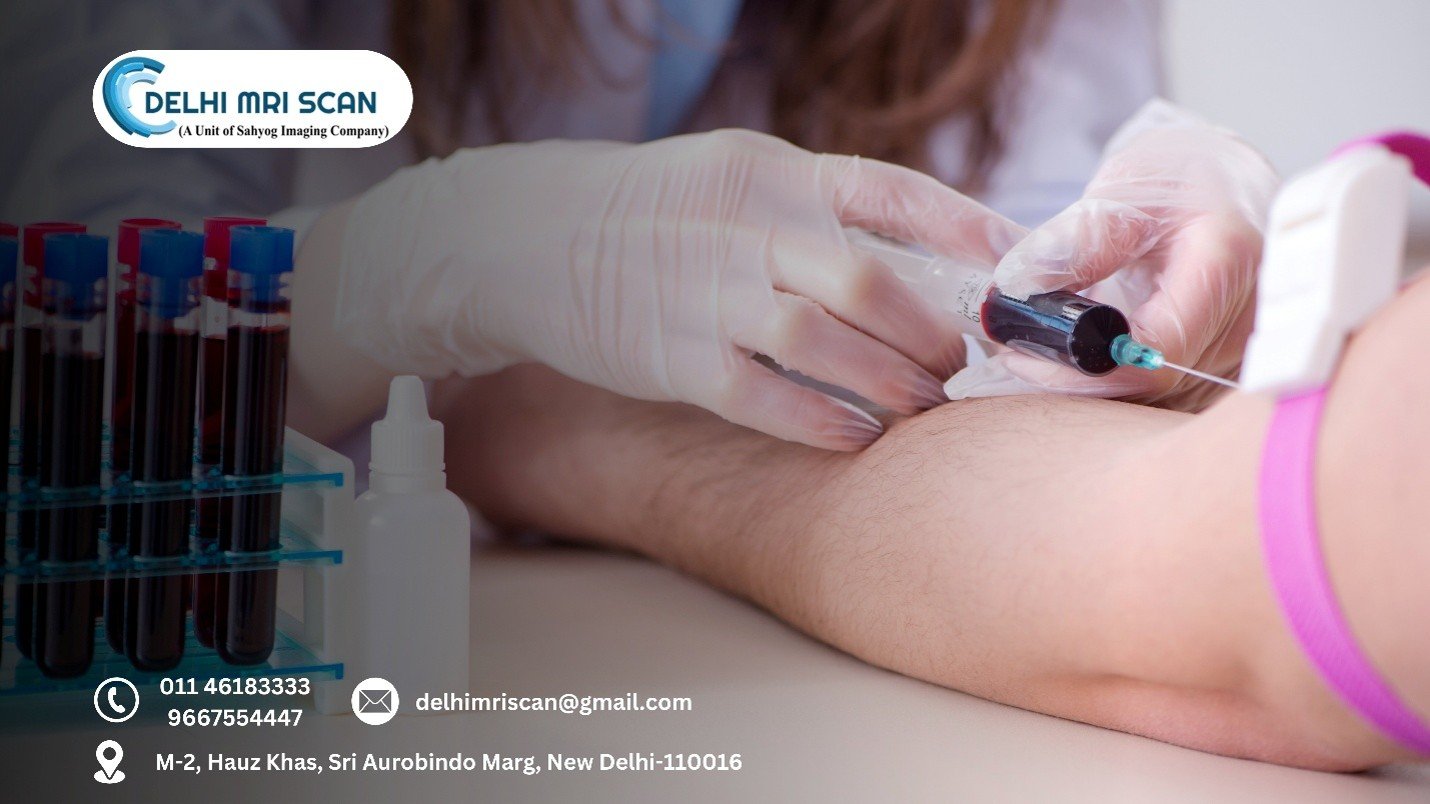
Blood tests are considered the gold standard for diagnosing anemia. Unlike many conditions that require scans or invasive procedures, anemia can usually be identified through simple laboratory testing.
A proper Blood Test in Hauz Khas can help doctors determine:
- Whether anemia is present
- The severity of anemia
- The exact type of anemia
- The underlying cause
- How the body is responding to treatment
At Delhi MRI Scan in Hauz Khas, advanced diagnostic technology ensures accurate and reliable blood testing for faster diagnosis and treatment planning.
Why Blood Tests Are the Gold Standard for Diagnosing Anemia
Unlike many other conditions that require imaging or biopsies for diagnosis, anemia is primarily diagnosed through blood tests. This makes the process simple, affordable, and highly accurate.
Blood tests can tell your doctor not just whether you have anemia, but also what type of anemia you have, how severe it is, what is causing it, and how your body is responding to treatment. No other single investigation can provide this level of detail in such a straightforward way.
The key is knowing which blood tests to order and how to interpret the results together as a complete picture rather than looking at any single value in isolation.
At Delhi MRI Scan in Hauz Khas, our team ensures that blood samples are processed with precision and that results are delivered with the accuracy needed to support your treating doctor in making the right diagnosis.
The Complete Blood Count: The Starting Point for Every Anemia Diagnosis
The Complete Blood Count, commonly known as a CBC, is the first and most important test ordered when anemia is suspected. It is a comprehensive analysis of all the cells present in your blood, red blood cells, white blood cells, and platelets.
For anemia specifically, the CBC provides several key values that your doctor will examine carefully.
- Hemoglobin (Hb): This is the most direct measure of anemia. Normal hemoglobin levels in adult women are between 12 and 16 grams per deciliter, and in adult men between 13.5 and 17.5 grams per deciliter. A value below these thresholds confirms the presence of anemia. The degree to which the value falls below normal indicates the severity — mild, moderate, or severe.
- Hematocrit (HCT): This value tells you what percentage of your blood volume is made up of red blood cells. In anemia, this percentage is lower than normal, reflecting the reduced number or size of red blood cells.
- Red Blood Cell Count (RBC): This measures the actual number of red blood cells present in a given volume of blood. A low RBC count contributes directly to lower hemoglobin levels.
- Mean Corpuscular Volume (MCV): This is one of the most useful values in the CBC for identifying the type of anemia. MCV measures the average size of your red blood cells. Small red blood cells, indicated by a low MCV, typically point toward iron deficiency anemia or thalassemia. Large red blood cells, indicated by a high MCV, typically suggest vitamin B12 or folate deficiency. Normal-sized red blood cells with low hemoglobin may indicate anemia of chronic disease or kidney-related anemia.
- Mean Corpuscular Hemoglobin (MCH) and MCHC: These values measure how much hemoglobin is present inside each red blood cell and how concentrated it is. Low values in both suggest iron deficiency.
- Reticulocyte Count: Reticulocytes are immature red blood cells that have just been released from the bone marrow. A high reticulocyte count means the bone marrow is working hard to produce new blood cells, which can happen after blood loss or during treatment. A low count may suggest that the bone marrow itself is underperforming, which points to a different category of anemia.
Together, these CBC values give your doctor a detailed snapshot of your blood health and help narrow down the likely cause of your anemia significantly.
Iron Studies: Diagnosing the Most Common Type of Anemia in India
Iron deficiency anemia is the single most common type of anemia in India, particularly in women, young children, and vegetarians. Once the CBC suggests iron deficiency as a possibility, your doctor will order a set of iron studies to confirm the diagnosis.
- Serum Ferritin: Ferritin is a protein that stores iron in your body. It is the single most sensitive marker for iron deficiency. A low serum ferritin level — even before hemoglobin levels have dropped significantly — is an early and reliable sign that your body's iron reserves are depleting. This makes ferritin testing extremely valuable for catching iron deficiency before it fully develops into anemia.
- Serum Iron: This test measures the amount of iron currently circulating in your blood. In iron deficiency anemia, serum iron levels are typically low.
- Total Iron Binding Capacity (TIBC): TIBC measures how well your blood can transport iron. When iron levels are low, the body produces more transferrin — the protein that carries iron — in an attempt to capture every available iron molecule. This raises the TIBC. A high TIBC alongside low serum iron and low ferritin is a classic pattern confirming iron deficiency anemia.
- Transferrin Saturation: This is calculated from the serum iron and TIBC values and tells you what percentage of iron-binding capacity is actually being used. A low transferrin saturation in the context of other abnormal iron values further supports the diagnosis.
Vitamin B12 and Folate Tests: Finding the Cause of Large Red Blood Cells
When the CBC shows that your red blood cells are unusually large, your doctor will test for vitamin B12 and folate deficiency. Both of these nutrients are essential for the production of healthy red blood cells, and a deficiency in either one causes the bone marrow to produce large, abnormal cells that cannot function properly.
- Serum Vitamin B12: This test directly measures the level of B12 in your blood. In India, B12 deficiency is extremely common, especially among strict vegetarians and vegans, because B12 is found almost exclusively in animal products. Levels below 200 picograms per milliliter are generally considered deficient, and levels between 200 and 300 are often treated as borderline.
- Serum Folate: Folate, also known as vitamin B9, works closely with B12 in the production of red blood cells. Folate deficiency is common in people with poor dietary intake, during pregnancy, and in those who consume excess alcohol. Low folate levels alongside a high MCV confirm folate deficiency anemia.
Both B12 and folate deficiency can also cause neurological symptoms — tingling in the hands and feet, memory problems, and mood changes — which is why diagnosing and treating these deficiencies promptly is important beyond just correcting the blood count.
Peripheral Blood Smear: Looking at Blood Cells Under a Microscope
While the CBC and other blood tests provide numbers, the peripheral blood smear allows a trained pathologist to actually look at your red blood cells under a microscope. This visual examination adds an important layer of information that numbers alone cannot always capture.
Different types of anemia produce red blood cells with distinct shapes and appearances. In iron deficiency anemia, the cells appear small and pale. In sickle cell anemia, cells take on a crescent or sickle shape. In thalassemia, cells may appear irregularly shaped and fragmented. In B12 deficiency, unusually large oval-shaped cells called macro-ovalocytes are visible.
The smear can also reveal immature cells, abnormal white blood cells, or platelet abnormalities that may point toward more complex blood conditions requiring specialist care.
Additional Tests That May Be Ordered
Depending on the results of the initial blood tests, your doctor may order additional investigations to get a complete picture of your condition.
- Kidney Function Tests: The kidneys produce a hormone called erythropoietin that stimulates red blood cell production in the bone marrow. Chronic kidney disease can reduce erythropoietin levels, leading to anemia of chronic kidney disease. Kidney function tests help identify this connection.
- Thyroid Function Tests: An underactive thyroid gland can slow down the body's metabolic processes, including red blood cell production, and contribute to anemia. Thyroid testing helps rule this out or confirm it.
- Liver Function Tests: The liver plays a role in storing iron and producing blood proteins. Liver disease can contribute to anemia in various ways, and liver function tests help assess this link.
- Hemoglobin Electrophoresis: This specialized test is used to detect structural abnormalities in hemoglobin, including sickle cell disease and thalassemia — both of which are significant causes of anemia in India.
- Erythrocyte Sedimentation Rate (ESR) and C-Reactive Protein (CRP): These inflammatory markers help identify whether chronic inflammation or infection is contributing to the anemia, a pattern seen in anemia of chronic disease.
Overall Summary
Anemia may be common, but it should never be ignored. Untreated anemia can affect your energy levels, immunity, heart health, and overall quality of life.
The good news is that diagnosing anemia is simple with the right blood tests. A timely Blood Test in Hauz Khas can identify the exact cause of your symptoms and help your doctor begin effective treatment immediately.
At Delhi MRI Scan in Hauz Khas, we are committed to providing accurate, affordable, and timely diagnostics to help patients take control of their health.
If you or your loved ones are experiencing symptoms of anemia, do not delay. Book your Blood Test in Hauz Khas today at Delhi MRI Scan and take the first step toward better health.
Related post


Dec 15, 2025
Tests Every Woman Should Consider After 30
Dec 02, 2025
